Keynote Speaker
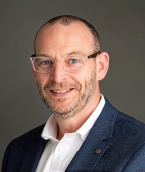
Prof. Christopher Nugent
Ulster University, UK
Chris was awarded a first class honours in BEng Electronic Systems and a PhD in Biomedical Engineering where he researched the optimisation of Neural Network ensembles for medical classification purposes. He was appointed as full Professor of Biomedical Engineering in 2008. From 2015-2017 he was the Director of the Computer Science Research Institute at Ulster University and in 2017 he was appointed Head of the School of Computing. He is currently serving his third term in this role. His research interests are focussed at the intersection of IoT and AI specifically to support human activity recognition within smart environments. This has involved research in the topics of activity recognition and behaviour modelling, technology adoption modelling and optimisation of AI based classification models. To date he has successfully supervised 47 PhD students to completion and in 2024 he was recognised on Stanford's top 2% most highly cited scientists and is currently ranked No. 1 internationally on Google Scholar for citations in the area of Ambient Assisted Living. He has been instrumental in initiating, preparing, supporting and managing a number of externally funded Research Projects. The total funding allocated to Ulster as a result of these projects is in excess of £52M. In 2016 he was awarded a Senior Distinguished Research Fellowship by Ulster University. He is currently a visiting Professor in Pervasive and Mobile Computing at Lulea Technical University (Sweden), a visiting Professor in Computing at Shandong Jianzhu University (China) and a Visiting Professor in Computing at Dalian University of Technology (China). Since 2008 he has served as an Associate Editor for the Editorial Board of the IEEE Engineering Medicine and Biology Conference, Healthcare Information Systems Theme and he is currently serving as a member of Ireland’s Commission on Care for Older People.
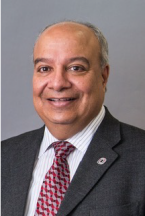
Prof. Hesham H. Ali
University of Nebraska Omaha, USA
Hesham H. Ali is a Professor of Computer Science and the director of the University of Nebraska Omaha (UNO) Bioinformatics Core Facility. He served as the Dean of the College of Information Science and Technology at UNO between 2006 and 2021. He has been a research collaborator at Mayo Clinic Research Hospital since 2022. He has published numerous articles in various computing and informatics fields of research, including scheduling, distributed systems, data analytics, wireless networks, and Bioinformatics. He has published two books in scheduling and graph algorithms, and several book chapters in Bioinformatics. He has been serving as the PI or Co-PI of several projects funded by NSF, NIH and Nebraska Research Initiative in the areas of AI, Bioinformatics, Data Analytics and Wireless Networks. For the last 25 years, he has also been leading a Bioinformatics Research Group that focuses on developing innovative computational approaches to model complex biomedical systems and analyze big bioinformatics data using AI tools, Network models, and graph algorithms. The research group is currently developing next generation data analytics tools for analyzing large heterogeneous biological and health data associated with various biomedical research areas, particularly projects associated with infectious diseases, microbiome studies, early childhood development and aging research. He has led many local and national outreach initiatives, including Bioinformatics training workshops, Women in IT initiatives, IT education and training programs, and IT summer internship camps.odels can leverage the new biomarkers in supporting advanced biomedical research and lead to the next generation of healthcare.
Invited Speaker of ICBEB 2026
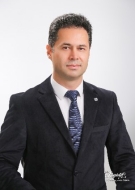
Prof. Kadir Gök
İzmir Bakırçay University, Turkey
Prof. Dr. Kadir Gök received his Bachelor's, Master's, and Ph.D. degrees in Mechanical Education from Gazi University, Afyon Kocatepe University, and Kocaeli University, respectively. His academic career began in 2004 as an Instructor at Dumlupınar University, followed by specialized training in Biomechanics at Ulm University. Throughout his career, Dr. Gök has authored numerous scientific publications, contributing significantly to TÜBİTAK and BAP-supported projects. He holds one registered patent, four patent applications, and two registered trademarks. In 2016, Dr. Gök joined Manisa Celal Bayar University as an Assistant Professor, where he was promoted to Associate Professor in Mechanical Engineering in 2018. Since August 2019, he has been serving as an Associate Professor in Biomedical Engineering at İzmir Bakırçay University, where he was elevated to the rank of Professor in July 2023. Additionally, from June 2020 to December 2023, he served as the Director of the Biomedical Technologies Design Application and Research Center at İzmir Bakırçay University. Dr. Gök's research interests include biomechanics, biomaterials, biosensors, computer-aided finite element analysis, and the design of biomedical and orthopedic devices. He has participated as an Invited Speaker at “The 7th International Conference on Material Strength and Applied Mechanics (MSAM 2024)” held in Gyor, Hungary, demonstrating his expertise in his field. Additionally, he served as a Session Chair at the “3rd International Conference on Materials Science & Engineering” held during September 26-27, 2024, in Amsterdam, Netherlands, further showcasing his leadership and contributions to the academic community.
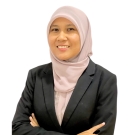
Dr. Mardhiah Kamaruddin
Universiti Malaysia Kelantan
(UMK), Malaysia
Dr. Mardhiah Kamaruddin is a Senior Lecturer at the Faculty of Entrepreneurship and Business, Universiti Malaysia Kelantan (UMK), Malaysia. She completed her Bachelor's degree in Statistics in 2014, followed by a Master of Science in Medical Statistics. In 2022, she earned her Ph.D. in Biostatistics, further solidifying her expertise in statistical methodologies applied to health and medical research. Dr. Mardhiah has demonstrated her leadership in the research field by successfully securing few national grants as the principal investigator. Her research primarily focuses on biostatistics, particularly in developing statistical techniques for analyzing health data to improve public health outcomes. Her work contributes to the broader understanding of medical data analysis, with a focus on precision and accuracy.
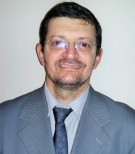
Prof. Dr. Pedro Bertemes-Filho
Santa Catarina State
University, Brazil
Graduated in Electrical Engineering in 1995 at the State University of Santa Catarina and PhD in Medical Physics at the University of Sheffield in 2002. Awarded by Fulbright at Dartmouth College in 2017 and visiting researcher in the University of Ljubljana in 2019. Titular Professor at UDESC since 2004, lecturing electronic instrumentation, sensors and transducers, introduction on biomedical engineering and coordinating research groups in biomedical engineering and electrical bioimpedance. Senior IEEE member since 2020. Reviewer of more than 12 international journals. Leader of the Biomedical Engineering research group at UDESC. Running 3 research projects, as principal investigator, in the area of bioimpedance, biosensors and wearable devices. International lectures in renowned Universities, such as Uruguay, Ljubljana, Sheffield, Hanover (USA), Copenhagen and Mexico. Areas of research interest: electrical bioimpedance, bioinstrumentation, biosensor and e-health. Edited international books, such as “Bioimpedance in Biomedical Applications and Research” and “Medicine-Based Informatics and Engineering” by Springer. More than 30 publications over the last 5 years, including a patent license. At current, I am the University Liaison of IEEE Sensors Council in South Brazil.
Previous Honored Speakers
 |
 |
 |
| Prof. Francis Y. L. Chin University of Hong Kong, Hong Kong |
Prof. Ming Chen Zhejiang University, China |
Prof. Jing Bai University of Minnesota Duluth, USA |
 |
 |
 |
| Prof. Philip O. Ogunbona University of Wollongong, Australia |
Prof. Hyoungseop Kim Kyushu Institute of Technology, Japan |
Dr. Lucia Ballerini University of Edinburgh, UK |
 |
 |
 |
|
Prof. Chee Peng Lim Deakin University, Australia |
Prof. M. Iqbal Saripan Universiti Putra Malaysia, Malaysia |
Prof. Falk Schreiber University of Konstanz, Germany |
 |
 |
 |
|
Prof. Sri Krishnan Toronto Metropolitan University, Canada |
Emeritus Prof. James C. Lin University of Illinois Chicago, USA |
Assoc. Prof. Roberto C. Sotero University of Calgary, Canada |
 |
 |
 |
|
Prof. FangXiang Wu University of Saskatchewan, Canada |
Prof. Jan Gorodkin University of Copenhagen, Denmark |
Prof. Chanchal Mitra University of Hyderabad |